

Why Money Is One of the Hardest Subjects to Talk About
Why You Jump From Impulse to Impulse
Struggling with how to stay focused? You’re not alone. Many of us jump from impulse to impulse throughout our day. A phone call. A notification pulling our focus away. A burst of inspiration that has us pulling out a project to add a few lines. Then a wall of distaste or disconnect, or a belief that we are unseen, and we isolate and hide behind our screens. Go to the gym? …if I have the energy, the weather is right, and the stars align.
Living your life by design means you stop waiting for the stars to align.
How to Stay Focused When Motivation Runs Out
We could wait for everything to fall into place and for lightning to strike us with inspiration. Or we could stop acting on our feelings and act on a short list instead: the things that matter most to us, that will build our vision and create the most value, now and in the long term.
You see, most of us already know what we need to do. Eat right. Meditate. Do a yoga or fitness session. Write another post to share our work and our values with the world.
But how do we set a course for success when life feels like it’s moving us along on the ocean currents of our emotions and the waves of our thoughts, talking us into and out of something in the same sentence?
It amazes me how often I can distract myself with the most random things, but sometimes it’s more than distraction. Fear can be what’s behind the procrastination.
If you struggle with motivation and distractions some days as I have, the solution is lifestyle design and being deliberate. Choose the things that make you feel most authentic, and the actions that lead to them. And only do those things.
How I Stay Focused: Three Places I Choose My Actions From
When I’m at and maintaining my best self, I only choose from three places: my calendar, my to-do list, and my habit tracker.
1. My Calendar
If it’s on my calendar, I do it, or I get ready to do it. I even block out time to travel or prepare for something on a day that might turn busy.
2. My To-Do List
Nothing on the calendar? Then I dive into my to-do list. There’s usually plenty on it, broken down into:
- Urgent tasks (time-sensitive in the next day or two)
- Administrative tasks due this week
- The next steps in building my business
It doesn’t include regular routine tasks like going to the gym. Those live on the next list. If I get one or two important things done from my to-do list in a day, every day, that’s actually pretty good.
3. My Habit Tracker
Nothing on the calendar, and the important to-do items are done? Or maybe I’m stuck in a waiting room with 15 minutes before an appointment. That’s when I go to my habit tracker. It gives me a list of things I can do in that exact moment. Mine includes goals or actions (to do and check off, or to check off for having avoided them) like:
- Gym routine: 4 times per week
- Gratitude journal, ten lines: every day
- 30 minutes of personal development reading: 5 times per week – Not sure what to read? Start with the books that changed my life.
- Meditation: every day
- Write one paragraph in my goal book: 5 times per week
- Avoid added sugars and processed food: 6 days per week
Each time you hit your desired minimum, stay under a maximum, or complete something, check it off.
These are the “one brick a day to build a house in a year” items. They help you grow your business or career and look after yourself.
They don’t need to happen at any given moment, but if you let them slip, a week or two goes by, and you wonder why you’re feeling down or behind.
If that feeling sounds familiar, here’s what to do when you feel behind
How the Habit Tracker Works in Real Life
Only ten minutes waiting somewhere? Do ten lines in your gratitude journal. You know it’s good for you, so tick it off instead of doomscrolling!
Got a couple of hours to kill before heading out for the evening? Run to the gym and hit your routine. You’ll feel good for doing it and good for ticking it off.
Busy day later, but you have an hour now? Probably best to meditate now and add a few items to your goal book to expand your vision for your business and family. Tick them off.
As you move through your week, you’ll see you’re ticking some habits off more easily than others. Which ones are lacking? The tracker shows you, so you can make a few hits on those too.
There’s science behind the satisfying ticks. A review of 138 studies found that people who monitor their progress are more likely to reach their goals, and it worked even better when they physically wrote it down.
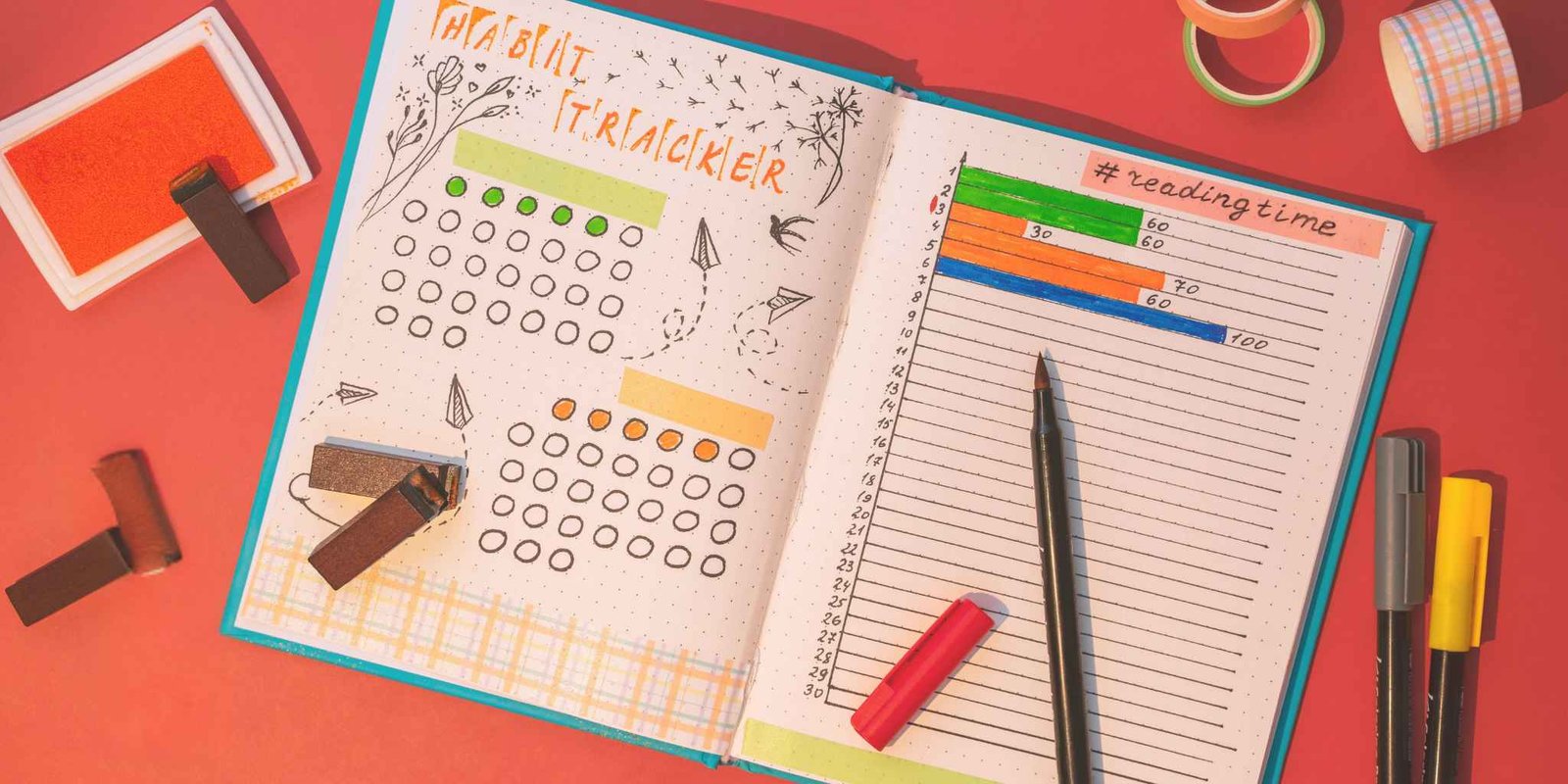
One brick at a time, one step in the right direction per day, is all it takes.
It’s just a little brick and a simple step. A thousand of them over a few years is a big journey, completed in small, digestible pieces.
Finally, there are the basics: drinking water, eating, using the bathroom, showering, sleeping. If you get these done in your own time without trouble, you don’t need to think about them consciously. Struggling to stay hydrated? Add it to your tracker: drink a quart before lunch, or check it off after half a gallon in a day. Or set a reminder to take your water bottle with you.
What Changes When You Follow This System
If you follow this process, you get:
- Less wasted downtime
- Better momentum throughout your day
- Better well-being from sticking to what works for you
- A better sense of purpose from consistently turning to what’s most important to you
What About Downtime and TV?
It also means none of this: “I’ll just put on one quick episode of my favorite show, or lie down on the couch for five minutes.” (Which, for some of us, can end up doing indefinitely…)
You can still enjoy TV, documentaries, a movie, or time with friends. Just do it deliberately. Put it on your habit tracker (“one episode”, “no more than 45 mins of YouTube” or “one hour of documentaries”) or add it to your calendar with a limit, so you get the benefit without overstaying your welcome.
Ask yourself:
- When is the best time for this? Maybe to wind down before bed? Only on weekends?
- Is there a limit? A little may be fine, but if you know you can get carried away, set a cap on your tracker. For example: “No YouTube or TV shows, and no more than 15 minutes of social media for non-business purposes. Five days per week.” Hit that in a day, check the box.
“I Don’t Know What I’m Going to Do Today”
You will! Start with your blocked-out calendar events. If nothing is locked in for the next stretch, move through your to-do list, and build your day with your habit tracker activities in between.
You can, of course, just do whatever and take a day off. But this is about being deliberate: building and creating what you want to create. Make a plan, then keep coming back to your to-do list and habit tracker for the next thing, and the next.
Planning ahead is a skill. Here’s how a stuntman prepares for high-pressure moments.
The more you do this, the more you’ll learn which things are best done when. You’ll also get clear on which ones actually contribute to your growth and well-being, and which ones don’t. This isn’t about being strict or difficult. It’s about being more self-aware and in control of our destiny, so we can live the lives we want.
The challenge is sometimes just choosing which street to turn down and keeping ourselves in the lane.
Why a Calendar, To-Do List and Habit Tracker Work Best Together
Tools like habit trackers can be great on their own, but they work best when you use all three together.
Think of it as a fluid, three-dimensional to-do list. There’s always something you can do congruently in this moment. Sure, you may have bigger tasks, but what if you only have 15 minutes? Or you don’t have your laptop? There will be something you can choose with the time and capabilities you have right now.
It also keeps you looking for the next thing that serves your growth and your legacy of serving others in the way you want.
No more staring at the big task and waiting for the perfect moment. If you tend to overthink before you start, here’s why smart people get stuck in mental paralysis
You shouldn’t have to worry about your mind or energy pulling you away if you keep going back to find the next thing on your list.
Start Designing Your Life This Week
This isn’t about being perfect, steadfastly rigid, or cruel to yourself. It’s about giving yourself the best chance of moving forward with the next best thing in that moment.
So over the next week or two, build out a habit tracker, use your calendar more deliberately, and refine your to-do list. If something isn’t on those three, add it if it’s beneficial. Keep coming back to those three places, and you’ll stay focused on the good stuff.
Frequently Asked Questions
Stop relying on fleeting emotions or waiting for inspiration to strike. Instead, act from a pre-decided system—check your calendar for scheduled commitments, tackle one or two priority items on your to-do list, or complete a small daily action from your habit tracker.
Your to-do list holds one-off, time-sensitive, or project-based tasks (such as urgent deadlines, weekly admin, and business-building steps). Your habit tracker holds recurring “one brick a day” routines (like workouts, reading, meditation, or hydration) that don’t require a fixed appointment time but keep you moving forward consistently.
Using all three creates a fluid system that eliminates decision fatigue regardless of how much time or energy you have. Your calendar locks in fixed commitments, your to-do list directs your deep work blocks, and your habit tracker gives you productive, bite-sized actions to fill unexpected 10- to 15-minute gaps in your day and keeps you focused on maintaining self-care in between for your well-being.
Yes, as long as you schedule downtime deliberately rather than using it as an impulsive escape. Put limits on your habit tracker (such as one episode before bed or capping non-business social media at 15 minutes a day, five days a week) so you actually recharge without losing momentum.
Ask yourself: what benefit does this activity truly bring me? Find the best way to give yourself that thing, add it to your habit tracker, and then do it.
Follow a simple three-step hierarchy: check your calendar first for any time-blocked events, pick one urgent or high-value task from your to-do list next, and turn to your habit tracker whenever you have spare pockets of time. This keeps you progressing without needing to be rigid or perfectionistic.
~ Be curious. Learn often. Live deliberately.
Brett Solomano
Further Reading
-

Reader Question: What Can I Do to Overcome Feeling Behind?
In this article, Brett Solomano, certified life coach, provides the answer to a common struggle many people face in their…
-

What is Your Vision for Success? (Hint: It’s What’s Behind the Money.)
Success isn’t one-size-fits-all. Through the contrasting lives of two musicians, explore why your personal vision for success should be defined…
-

Jealousy: What Is It and How to Move Past It
Jealousy is a heavy emotion experienced and felt by everyone. While we all feel it differently and not all to…

