
Active Mindfulness: Meditation for People Who Can't Sit Still
You don’t have to sit still to be mindful. Pick any activity, bring deliberate focus, breath and posture to it, and you are practicing.
A printable short guide you can read in two minutes and use today.
Why sitting meditation doesn't work for everyone
You tried meditation. Maybe it was a cushion, maybe the couch, maybe a quiet room with the lights low.
Within a minute you were restless. Within five you were bored, or annoyed at yourself. So you decided it wasn’t for you.
That’s a pretty common conclusion. It might also be the wrong one.
Sitting still is one way to practice. It isn’t the only way, and for some people it isn’t the right one.
Think about running. Plenty of people love it, and plenty of others don’t, and nobody concludes they can’t exercise. They simply enjoy a walk, a lift, a game, or a swim.
What if your attention was fine, and the sitting was just the part that didn’t fit?
Practicing mindfulness through movement tends to suit people who find stillness difficult: high-energy minds, athletes, performers, kids who struggle through a lesson, and neurodivergent thinkers.
True mindfulness doesn’t require a quiet room. It starts with whatever you’re already doing.
The three pillars: focus, breath, posture
Meditation and mindfulness practices tend to lean on the same three things: focus, breath, and posture.
Active Mindfulness asks you to make each one a deliberate choice while you do any activity.
The activity changes. The pillars stay the same.
How can you deliberately bring more mindfulness to any activity?
Focus
Gives your mind a place to land, so it wanders less. It tends to be what turns an ordinary activity into practice.
Breath
Brings you back to the present moment. Slower, deeper breaths tend to make you more present.
Posture
Connects you to your body, so you notice how you’re moving and what you’re holding.
Where to practice
Pick one activity. The pillars come with you. They apply the same way whether you’re an athlete mid-training, a performer before a show, an entrepreneur between calls or someone who spends the day on their feet.
Chores
Cooking, cleaning, folding laundry, washing dishes.
Walking
Mindfulness while walking: around the block, down a hallway, across a parking lot.
Eating
The first few bites of a meal, slowly and on purpose.
Exercise
A run, a lift, a pickup game, a stretch.
Hobbies
Painting, woodwork, knitting, gardening.
Music
Playing an instrument, or listening with nothing else competing.
Work or other labor
A shift, a job site, a task you've done a thousand times.
Study
Reading, writing, working through a hard page.
Waiting
A queue, a waiting room, the minute before a meeting starts.
No screens. The practice is done without a phone, tablet or any other screen.
Want the whole method on one page?
Download the free Active Mindfulness guide and see how focus, breath and posture work in any activity, no sitting still required.
About Brett
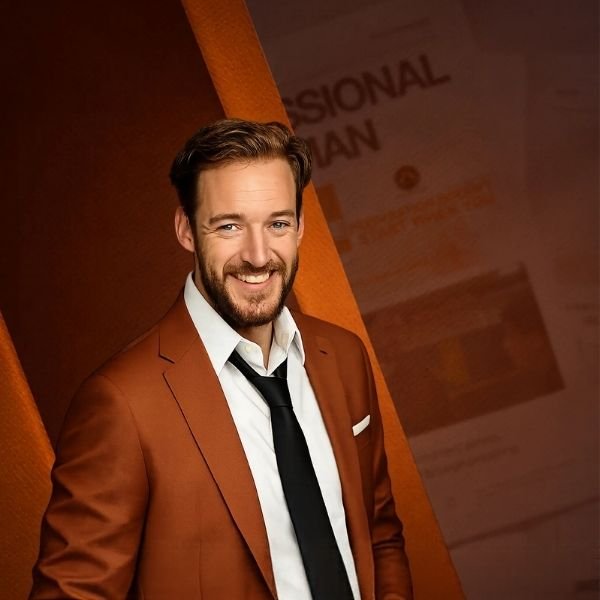
Brett Solomano is an ex-stuntman, performance coach, and youth coach based in Atlanta.
Stunt work taught him that focus, breath and posture aren’t abstract. They’re what you lean on when the moment is loud and the preparation has to hold.
Since then he’s coached athletes, performers, entrepreneurs and young people, including restless kids and older adults who’d decided they were too set in their ways to learn something new.
In his experience, most people don’t need to slow down before they can practice. They need something to do with the motion they already have, and that’s what Active Mindfulness offers.
Work with Brett
Speaking
Keynote speaking in Atlanta for conferences, organizations, and schools: practical talks on working with fear, performing under pressure, and staying present.
Coaching
Mindset and performance coaching, one-on-one or in a small group, to bring Active Mindfulness into your everyday routine.
Resources
Guides, mindfulness exercises and challenges you can try on your own, whenever you’re ready for the next one.
Upcoming Meditation Book
A book is in the works exploring the fundamentals of meditation, the science behind it, and how to get more out of your practice with less effort.
If you want to follow along as it comes together, leave your email below to get notified.
Frequently Asked Questions
Yes. Walking meditation is an established practice in several contemplative traditions. What makes it meditation is the deliberate attention you bring to the walk: where your focus is, what your breath is doing and how you’re holding your body. Active Mindfulness applies the same idea to walking and to a lot of other activities.
No. The practice happens inside the activity: the dishes, a walk, a workout, a long day of work. You keep doing the thing, and you make focus, breath and posture deliberate choices while you do it. In Brett’s coaching experience, that’s what makes it easier to keep up.
No. Sitting practice works well for plenty of people, and nothing here is a takedown of it. Active Mindfulness is another way in, for people who’ve tried sitting and found it didn’t suit them, and for people who already live in motion.
The practice is done without a phone, tablet or any other screen. Screens pull your focus out of the moment, and focus is the first pillar. Put the device down for the length of the activity, then pick it back up.
No. It’s a practical method for bringing deliberate attention to what you’re doing. It isn’t medical or therapeutic care, and it doesn’t replace either. If you’re dealing with something that needs professional support, a doctor or therapist is the right place to start.

